
How K-pop Became a Global Phenomenon
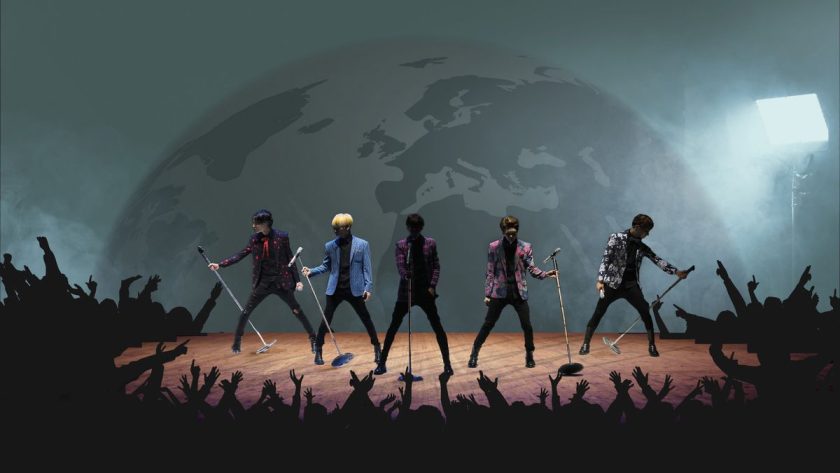
K-pop has become the international face of South Korea thanks to its highly organized and coordinated production system. More than any other international music industry, K-pop has been strategically designed to get into your brain and elevate South Korea and its culture to the world stage.
How did we get here? Through a combination of changing global politics, intelligent corporatization and media management, and an abundance of raw talent milled through an all-powerful star factory
K-Pop Started In 1992
K-pop as we know it could not exist without democracy and television, in particular, South Korea’s democratic government reforms in 1987, with the accompanying modernization and easing of censorship, and the impact these changes had on television.
Before South Korea’s media liberalization in the late ’80s, the music broadcast networks produced was primarily slow ballads or “trot,” a Lawrence Welk-ish blend of traditional music with old pop standards. However, after 1987, country radio broadcasting boomed, and South Koreans became exposed to a wider variety of music from abroad, including contemporary American music.
But TV is still the country’s dominant form of centralized media. By 1992, the national TV network had penetrated more than 99 percent of South Korean homes, and viewership was highest on weekends when talent shows took place. This televised talent show was critical in introducing the band to South Korean audiences; they still have a huge cultural impact and remain the single biggest factor in the South Korean band’s success.
Meanwhile, K-pop as a whole is building its brand, which is based on striking style and many qualities.
What It Takes To Become A K-Pop Idol
Three things make K-pop a visible and unique contributor to the realm of pop music: high-quality performance especially dance, a highly polished aesthetic, and an in-house studio production method that works to put out hits.
Through highly competitive auditions, starting around the ages of 10 to 12, music studios introduce talented kids into the K-pop regimen. Children attend special schools where they take special singing and dancing lessons; they learn how to moderate their public behavior and prepare themselves for life as a pop star; they spend hours in daily rehearsals and perform in weekend music shows as well as special group shows.
Through these shows, lucky kids can gain a fan following even before they officially “debut.” And when they’re old enough, if they’re one of the lucky few, studios will put them into idol groups or even, on occasion, launch them as solo artists.
Once an idol group is perfectly rehearsed, the studio creates pop songs for them, markets them, airs them on TV, sends them on tour, and determines when they will make their next “comeback” — a term that usually signifies the band’s latest album release, often accompanied by great fanfare, special TV appearances, and a whole new thematic concept.
Because of the control, they exert over their artists, South Korean music studios are directly responsible for shaping K-pop’s global image as a genre. But the industry is notoriously exploitative, and studio life is grueling to the point of being abusive; entered into long-term contracts, known as “slave contracts,” when they were children, which strictly dictated their private behavior, dating life, and public behavior.
The studio is also a breeding ground for predatory behavior and harassment from studio executives. In recent years, the increasing public attention to this problem has given rise to changes; in 2017, several studios agreed to significant contract reforms. However, as one artist who took his own life over this revealed, the cultural pressures of studios are rarely made public and can take a serious toll on those who grow up in the system.
Despite all this, the closed life of a K-pop star is coveted by thousands of South Korean teens and preteens to such an extent that auditions are still running to find talented kids for studio programs.
From the performance elements of a song how easy it is to sing live, how easy it is for the audience to sing along, the choreography, the costumes, and the attractive appearance.
All live performances make an idol a very active part. Fans watching in studios and live shows will sing their idols’ songs with musical intros and sometimes even a chorus showing unity and support for their idols.
This collective has helped ensure that the K-pop fan base both at home and abroad is truly huge, and intense to a degree that is difficult to overstate. Fans are very supportive of their favorite group members, and many fans go to great lengths to ensure their favorite idols look and dress as part of a world-class cast. K-Con, the largest US K-pop convention, has grown rapidly over the years and now includes Los Angeles and New York.
Modern K-pop is Full of Contradictions
Although government censorship of South Korean music has relaxed over time, it still exists, as does industry self-censorship in response to various controversial topics. South Korean social mores stigmatize everything from sexual references and innuendo to references to drugs and alcohol — as well as the illicit behavior of an idol that can lead to a song being banned from airplay and radio broadcasts.
Songs dealing with serious themes or thorny issues are largely off-limits, queer identities are generally addressed only as subtext, and lyrics are usually scrubbed down to subtle pleasantries. Thematically, it’s often charming and innocent, bordering on teenage.
Despite these limitations, K-pop has evolved in both nuance and sophistication thanks to artists and studios often risking censorship or relying on visual cues and subtext to fill in the gaps.
Given all these changes and paradoxes, we can perhaps foresee quite a bit about what the future of K-pop might look like: even more diverse, with an ever-increasing number of independent artists rocking the studios, though the vast majority of them must still play within the system’s rigid standards.
This gradual evolution suggests that part of the reason K-pop has been able to make international inroads in recent years is that it has been able to buck its rigid norms, through its use of modern themes and sophisticated subtext, without sacrificing the very subtle things that make it so. interesting. this seems to be a formula for continued global success especially now that South Korea and its culture are getting worldwide attention.
K-Pop Spreads Through The World
Hallyu may or may not boom, but the K-pop production machine keeps going. Over the last decade, K-pop has evolved and developed in different aspects. K-pop overcame the seemingly unbreakable walls of the mainstream music industry in the US, with the emergence of the sensational boy band BTS. The seven-member idol group made history and paved the way for fellow K-pop musicians in the US.
There’s no doubt that K-pop is one of the biggest alternative music genres in the mainstream market, and experts point out that the next step for K-pop in its globalization is regeneration. Ironically, the key to this continuity is that K-pop must lose its “Koreanness,” as Kim Do Heon puts it.
In recent years, K-pop labels are increasingly conducting global auditions, where they seek trainees regardless of their racial and ethnic background.
Many major K-pop labels, including SM Entertainment, Hybe, and CJ Entertainment, have announced plans to train and debut the group in the US this year. While the formation of idol groups with multinational backgrounds in the past continued to be based in Korea and use Korean as their primary language, these groups will be trained in the US to debut as global groups, according to a related statement made by the company.
While the K-pop system is an established business model, there is still room for improvement, with the issue of being open to different cultures to begin with.
Idols Are Also Human
Rather than seeking its way to the top, as K-pop music has done in its race to conquer globalization up until now, K-pop’s strength may lie in its unique ability to spread outward and weave itself in a transnational environment, as Lee Hye Jin, a professor of East Asian literature and pop culture at Semyung University.
This is also the direction Kpop should take to create a system where artists can prosper as musicians, and not just as components of the industry.
Previously in June, BTS announced they would be temporarily taking a hiatus from group activities to focus on their individual lives and solo careers. In doing so, the members talked about their mental and physical exhaustion from the K-pop system, which “gives no room for growth as people, and constantly forces them to make music,” said RM, BTS leader.
While commerciality is at the core of all genres of popular music, Jung Min Jae said there is no denying that K-pop is becoming more and more competitive, especially as groups need to deliver the maximum quality and quantity of performances within the legally stipulated seven-year timeframe.
Shifting trends at the industry level like that is something that must be worked on jointly by all related entities. But in the long run, critics of Kim Do Heon suggest it is the label and their training system that must be changed first for any fundamental progress to be made. To give more space for artists’ creativity, Kim Do Heon said the training system does not only focus on honing their talents on stage but on their maturity as individuals.






0